
Lower Explosive Limit (LEL) monitoring is designed to prevent fires and explosions by offering a warning of when a flammable atmosphere is approaching ignition, not by identifying gas leaks as a part of routine process monitoring. In industrial environments, like storage tanks, process enclosures, chemical plants, and fuel handling facilities, that warning must remain reliable despite fluctuating oxygen levels, background hydrocarbons, and the presence of interfering substances that can influence LEL sensor response. As LEL monitoring performance depends heavily on the detector's sensing principle, the reliability of its warning is closely tied to its behaviour in practice. Two sensing technologies dominate LEL monitoring applications today: infrared gas detection and catalytic sensor gas detection. Although both are widely used to assess flammable atmospheres, they operate on fundamentally different principles.
Understanding what LEL monitoring measures
LEL monitoring quantifies how close an atmosphere is to the point at which ignition becomes possible. Readings are expressed as a percentage of the LEL, with 100% LEL corresponding to the minimum concentration at which a gas-air mixture can ignite under defined reference conditions. This scale provides a practical margin for intervention, allowing action to be taken well before the flammable range is reached.
In practice, a %LEL reading is obtained using one of two sensing technologies:
- Infrared gas detection- which determines gas concentration through optical absorption.
- Catalytic sensor gas detection- which infers combustibility from the heat released during gas oxidation.
The distinction between these two sensing technologies is important because LEL monitoring does not measure flammability directly. Instead, it relies on a physical proxy for ignition potential, and when that proxy no longer reflects actual combustibility, the reading itself loses meaning. In such cases, a LEL monitoring detector may continue to indicate 0% even as a hazardous atmosphere develops, with no visible indication that the measurement has become invalid. For LEL monitoring, the reliability of the warning ultimately depends on whether the sensing approach suits the application conditions in which it is deployed.
Atmospheric and chemical conditions that shape LEL monitoring performance
LEL monitoring performance is closely linked to the surrounding atmosphere, with oxygen availability often acting as the first limiting factor. Many hazardous locations, such as storage tanks, reactors, and purged process enclosures, operate with reduced or variable oxygen levels. The ability of a sensing technology, under these conditions, to function independently of oxygen becomes a defining requirement rather than a secondary consideration, since oxygen-dependent sensors can under-report flammable gas concentrations or cease responding altogether.
Beyond oxygen, atmospheric composition adds further complexity to LEL monitoring. Industrial air frequently contains solvents, exhaust gases, or residual process vapours that interfere with detection. In catalytic sensor gas detection, some compounds produce cross-sensitivity effects that generate apparent LEL readings without any apparent hazards, while others suppress sensor response and mask real risks. Long-term exposure to contaminants such as silicones, sulphur compounds, or halogenated hydrocarbons can also permanently degrade catalytic sensing elements. Infrared gas detection is influenced by a different set of constraints. Despite not depending on oxygen and being resistant to many sensor poisons, its response is shaped by gas composition and optically active background hydrocarbons.
Ignoring these conditions does not cause an immediate failure, but it can quietly undermine the validity of the LEL measurement over time, making the choice of technology vital for maintaining a meaningful safety margin.
When infrared gas detection is the correct choice for LEL monitoring
Infrared gas detection determines combustible gas concentration by measuring the absorption of specific infrared wavelengths by IR-active gas molecules, primarily through carbon hydrogen (C-H) bonds. Since this is an optical measurement rather than a chemical reaction, sensor performance remains stable across a wide range of operating environments. Infrared gas detection is particularly well suited to LEL monitoring applications where one or more of the following conditions apply:
- Oxygen-deficient or inert atmospheres are present
- Sensor poisons or persistent chemical contaminants exist
- Background hydrocarbons are continuously encountered at elevated concentrations
- A fail-safe detection principle is required to avoid undetected sensor degradation.
By eliminating combustion and surface reactions, infrared gas detection maintains measurement integrity in environments that would progressively impair other sensor types. Such stability allows reliable LEL monitoring even during prolonged exposure to flammable gases or chemically aggressive atmospheres.
When catalytic sensor gas detection is the correct choice for LEL monitoring
Catalytic sensor gas detection operates by oxidising combustible gases on a heated catalytic element and measuring the resulting temperature rise. Because catalytic sensors respond to combustibility rather than a specific molecular signature, this broad response is particularly valuable when gas composition is uncertain or variable.
It is essential to use catalytic sensor gas detection for LEL monitoring applications involving:
- Combustible gases such as hydrogen or acetylene that do not absorb infrared radiation
- Variable or undefined mixtures of combustible gases
- High-temperature environments where optical systems may be less suitable
- Clean, well-ventilated locations requiring general-purpose LEL monitoring.
In oxygen-stable, low-contamination environments, catalytic sensor gas detection can provide a predictable indication of combustibility, delivering a dependable early warning of flammable conditions.
Selecting the right technology
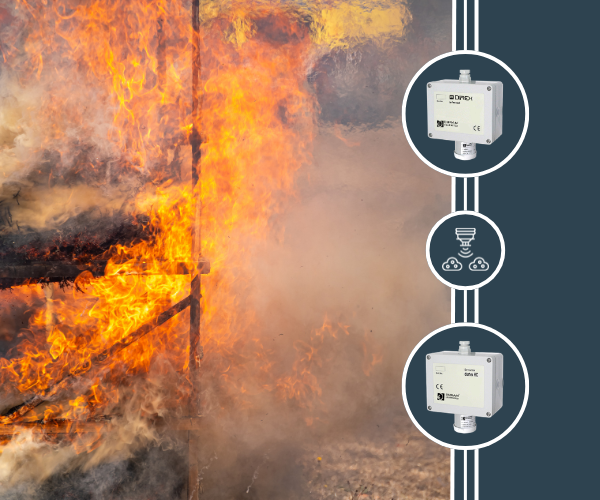
Choosing between infrared gas detection and catalytic sensor gas detection is an engineering decision that must account for gas chemistry, oxygen availability, and environmental contamination. No single gas detection technology is universally suitable for all LEL monitoring applications, and suitability must be assessed case by case. With over 50 years of manufacturing experience, Duran Electrónica supports safety professionals in specifying LEL monitoring solutions that align with real-world operating conditions, not just theoretical performance specifications. Our DIREX infrared detectors are intended for inert, contaminated, or high-exposure environments where optical stability is critical. Additionally, our DURTEX catalytic detectors support applications involving hydrogen, mixed combustibles, or clean industrial spaces where catalytic sensing remains the correct approach. Speak to our specialists to learn more about our available detectors.