
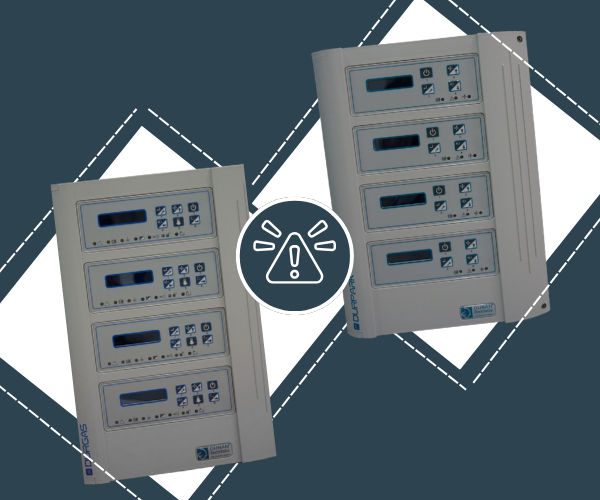
Regulators do not evaluate gas detectors in isolation during inspections and certifications. They examine how the whole integrated gas detection system, spanning detectors, alarm management, and outputs and control functions, behaves as a whole. Does the alarm trigger at the correct threshold? Does escalation follow the required sequence? Do interlocks respond reliably under fault conditions? The answer to each of these questions leads back to the gas detection control panel, the central controller of the gas detection system. Proper gas detection control panel integration aligns detection, alarm processing, escalation, and actuation into a single-auditable decision chain that supports code-compliant alarms and operator alerts across real-world operating scenarios.
Best practice 1: treat the gas detection control panel as the compliance decision point
Regulatory standards, such as EN 50545-1 (Europe) and UL 2075 (North America) assess how a gas detection system behaves as a whole, not how individual components perform independently. A detector may measure gas accurately, but compliance is determined by how the control panel validates that signal, applies the appropriate response logic, and activates alarms and interlocks in the required sequence. Integrated gas detection and alarm systems that achieve consistent compliance are designed so that the gas detection control panel functions as the point where detection data is evaluated and translated into defined safety actions, rather than simply relayed without evaluation.
Best practice 2: preserve signal quality at the gas detection control panel
Code-compliant alarm behaviour depends on the quality of the signals received by the gas detection control panel. Long cable runs and undersized conductors can introduce voltage drop, subtly shifting detector outputs near low-level alarm thresholds. Designing cable lengths and cross-sections so detector signals arrive at the gas detection control panel within their intended operating range allows alarm thresholds and escalation sequences to be applied consistently, supporting predictable, code-compliant alarms.
Electrical noise presents a similar integration risk. Industrial environments can introduce electromagnetic interference that destabilises analogue signals and contributes to false or inconsistent alarms. Shield twisted-pair cabling, proper grounding, and, where appropriate, digital communication, such as RS485 Modbus protocol, help preserve signal integrity at the gas detection control panel. This ensures the panel can assess both gas concentration and detector status reliably, supporting stable decision-making and consistent code-compliant alarm behaviour.
Best practice 3: implement stratified alarm responses and intelligent zoning
Alarm responses should scale as risk increases, instead of relying on a single alarm stage. By integrating the gas detection control panel to manage multiple alarm thresholds and response stages, early conditions can be addressed through ventilation control, escalated to occupant notification as concentrations rise, and ultimately enforce emergency isolation at critical levels. The use of defined alarm stages and escalation paths is a key aspect of how code-compliant alarms are assessed during certification and inspection.
After alarm responses are stratified, zoning limits those responses to the affected area. Effective gas detection control panel integration ensures that thresholds and responses apply only where gas is detected, so a release in one laboratory or parking sector does not unnecessarily disrupt adjacent spaces. By managing zones independently and maintaining centralized supervision, the integrated gas detection and alarm system supports both regulatory compliance and operational continuity.
Best practice 4: design the gas detection control panel for fail-safe operation
When faults occur within a gas detection system, code-compliant alarms must default to predictable and safe behaviour. Life safety codes therefore favor normally energized relay configurations, where any loss of power or communication forces outputs into a defined alarm or safe state. Successful gas detection control panel integration enforces this fail-safe principle through supervised outputs, allowing the panel to continuously verify the integrity of alarm and interlock circuits rather than assuming normal operation.
Power continuity is an essential part of this fail-safe approach. Battery backup or uninterruptible power supplies must be sized to support detectors, control processing, and outputs for the required duration. During a facility-wide power loss, the gas detection control panel must remain fully operational so code-compliant alarms and enforced safety actions continue to function as intended, even if normal power is unavailable.
Best practice 5: maintain traceability and diagnostics at the gas detection control panel
Over time, compliance is demonstrated as much through records and verification as through alarm activation. The gas detection control panel is crucial for preserving traceability by maintaining a non-volatile event history that captures alarms, faults, and operator interactions. When detectors provide individual identification, each recorded event can be traced to a specific location, enabling faster response, clearer incident review, and straightforward verification during audits.
Ongoing diagnostics help preserve the reliability of code-compliant alarms. Performance issues can be identified before alarm behaviour is affected by tracking sensor drift, communication issues, and calibration status at the control panel. This visibility prevents gradual, unnoticed degradation and helps ensure that compliance is sustained throughout the operational life of the integrated gas detection system, not just at commissioning.
Delivering safety through gas detection control panel integration
A code-compliant alarm system ultimately reflects the quality of its integration. If gas detection control panel integration is engineered around stable signal paths, proportional logic, fail-safe behavior, disciplined commissioning, and audit-ready diagnostics, compliance is achieved through normal system operation instead of recovered through later remediation. At Duran Electrónica, platforms such as DURGAS and DURPARK are designed to manage gas detection, alarm responses, and interlocks from a single, auditable control platform. Reach out to Duran Electrónica today to see how we can support your next gas detection project with products built for reliable, code-compliant alarm performance.